

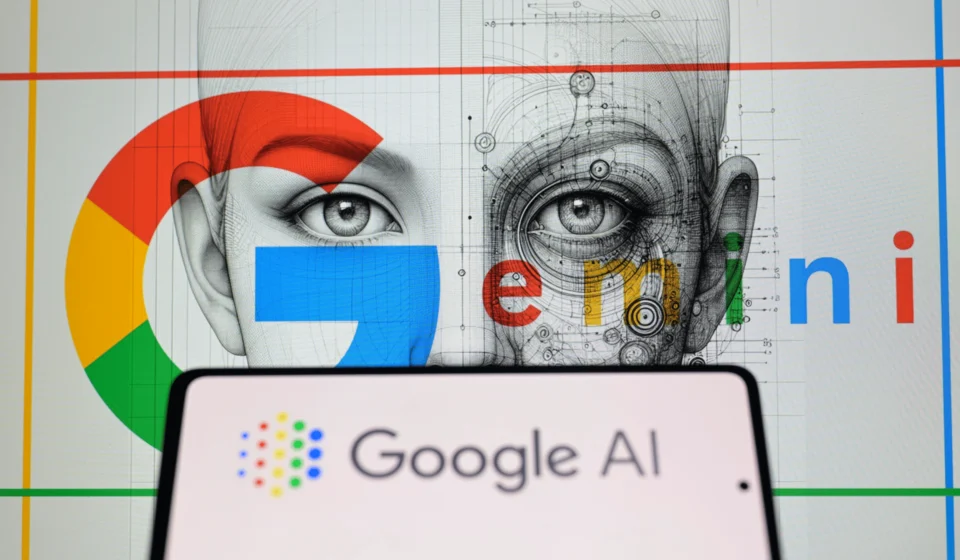
The Google Ads AI Shift: From Guesswork to Systematized Growth

If you still see Google Ads as a keyword-selection tool, you’re operating in the past.
Google Ads has evolved into an AI-driven system, and success today no longer comes from isolated tactics or technical “hacks.” It comes from how well brands design systems that feed the AI with the right signals, data, and strategy.
Google Ads is no longer about guessing what might work.
It’s about systematizing growth.
Google Ads Is Now an AI System — Not a Channel
In its current form, Google Ads operates as an AI execution layer.
Your role is no longer to manually optimize bids or obsess over granular keyword tweaks.
As many specialists in the platform highlight:
AI is not the strategy. AI is the execution engine.
The strategist’s job has shifted from bid configurator to system architect.
You define:
- the structure
- the objectives
- the value signals (Customer Value Optimization)
The AI executes:
- creative generation
- bidding decisions
- real-time optimization at scale
Growth becomes repeatable when marketing is treated as a system, not a set of disconnected campaigns.
The Risk of “Leaky Funnels” in an AI-Driven Model
Even the most advanced AI model cannot compensate for a broken funnel.
According to industry research, most performance loss in Google Ads happens after the click, not before it.
The most common failures are:
- Message mismatch
Ads focus on what the brand wants to say, not on what the customer needs to hear. - Post-click friction
The ad works, but the landing experience fails to convert intent into action. - No focus on lifetime value
Acquisition is optimized for first-time buyers only, ignoring retention and LTV.
AI amplifies what you feed it.
If the system is broken, AI scales inefficiency faster.
The New Search Reality: Conversational Search & Query Fan-Out
Search behavior is no longer linear.
Users are no longer typing simple keywords. They are describing problems, goals, and constraints in conversational interfaces powered by AI.
This shift introduces what many experts call query fan-out:
- The search engine breaks one complex intent into multiple micro-queries
- Results are assembled into direct recommendations, not rankings
Impact on Customer Acquisition
Brands are no longer fighting only for “position one.”
They are competing to become the entity recommended by the AI inside the conversation.
If your brand is not trusted by the model, it simply doesn’t exist in the buying journey.
AEO & GEO: The New Frontier of Google Ads and Search
Google Ads now lives inside a generative search ecosystem.
That means brands must optimize not only for clicks, but for citations and recommendations by large language models (LLMs).
This is where:
- Answer Engine Optimization (AEO)
- Generative Engine Optimization (GEO)
become critical.
Being present in paid ads is no longer enough.
Your brand must be recognized as a trusted entity by the AI to appear in conversational search results.
Key concepts driving this shift include:
- LLM Seeding
Structuring content and data so models like ChatGPT and Gemini can reference your brand as a solution. - Semantic Triples
Clear subject-predicate-object relationships that help AI understand who you are, what you do, and who you serve. - Product-Led SEO
Treating SEO as a product problem, not a content volume problem.
The Decline of the Landing Page as the First Touchpoint
In many journeys, the traditional “click → landing page” flow no longer exists.
Users can:
- buy directly via Google Shopping
- compare products inside AI interfaces
- receive recommendations without ever visiting a website
Strategic Implication
Customer acquisition must move from conversion-only thinking to Customer Value Optimization (CVO).
Brands must influence:
- awareness
- consideration
- conversion
inside third-party ecosystems, not only on their own sites.
Off-site presence now plays a decisive role in what AI systems say about your brand.
The SOAR Framework for AI-Driven Growth
To operate effectively in this new environment, brands can apply the SOAR framework:
S — Streamline
Simplify campaign structures and reduce unnecessary complexity.
O — Orchestrate
Align teams, data, and creative to feed the AI with consistent, high-quality signals.
A — Automate
Let AI handle repetitive execution tasks and granular bidding.
R — Reposition
Shift focus toward creative strategy, messaging, and customer experience.
This is where humans add leverage — not by fighting the AI, but by directing it.
AI Is the Execution Engine — Strategy Is Still Human
The future of Google Ads is not humans versus AI.
It’s humans with AI.
Google Ads’ AI model is a powerful scaling mechanism, but it requires:
- strategic intent
- clean systems
- a deep understanding of the Customer Value Journey
Stop guessing tactics.
Start auditing your acquisition systems.
When AI is fed with the right structure, growth stops being accidental — and becomes inevitable.

Hi, this is a comment.
To get started with moderating, editing, and deleting comments, please visit the Comments screen in the dashboard.
Commenter avatars come from Gravatar.